LEGS is managed by a Board of Trustees, and supported by a Strategic Planning Committee, a small central secretariat and a Technical Advisory Group. Together they oversee all LEGS activities, including the development and roll-out of the training programme, the maintenance of LEGS core functions and the establishment of a network of interested practitioners.
Trustee Vacancies
We’re always interested in trustees with a diverse profile and skill set. If you’d like to learn more, please download the PDF for more details.
Trustees
Dr. Bashair Ahmed
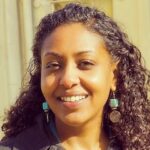 Bashair is the CEO of Shabaka, a research consulting organisation focused on diaspora, migration and humanitarianism. She has over 20 years of experience working with several United Nations Agencies and international organisations focused on fragile and conflict-affected countries.
She has consulted on a wide range of initiatives focused on migration and diasporas, including the protection of irregular migrants, the development of an e-training module for diaspora organisations on humanitarian principles and guidance on diaspora engagement in the development and humanitarian response. Bashair holds a doctorate in Migration Studies from the University of Sussex, where she is also a Research Associate. Her academic interests include humanitarianism, diasporas, migration and development, and intergenerational engagement.
Ced Hesse, Chair
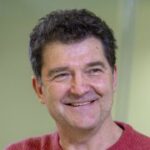
Ced is a senior associate of the International Institute for Environment and Development (IIED), specialising in locally-led climate action and resilience building in dryland regions of East and West Africa. He previously served as a Senior Fellow within the Climate Change group of IIED, where he managed a portfolio of research and capacity-building initiatives. His work at IIED focused on strengthening institutional responses to the climate crisis in collaboration with local and national governments, universities, and civil society organisations, with a particular emphasis on enabling national and local government planning systems. The goal of these efforts was to enhance the resilience of dryland economies and services, operating under conditions of resource variability, through strong community engagement, social inclusion, and public accountability.
Before joining IIED in 1997, Ced co-founded and managed the Arid Lands Information Network (ALIN), with offices in Dakar and Nairobi. He previously worked for Oxfam and what was then the International Livestock Centre for Africa (ILCA) in Mali.
Irfan Khan
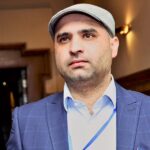 Irfan Khan has over 20 years of experience in the development and humanitarian sectors. As Director of Humanitarian and International Partnerships at Muslim Hands UK, he specialises in partnership development, resource mobilisation, programme planning, financial management, and emergency relief. He has managed projects funded by major donors such as the UN, World Bank, and USAID, across countries including Afghanistan, Haiti, Kenya, and Syria.
Irfan holds a master’s degree in development studies and is fluent in English, Pashto, and Urdu. He is committed to supporting LEGS in its mission to strengthen livestock-based livelihoods in emergencies.
Kate Sadler
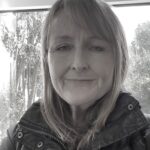 Kate is a public nutritionist with over 25 years of experience in the design, management, evaluation and research of nutrition interventions in Africa and Asia. She has worked as a program nutritionist in several countries in Africa, including Ethiopia, Malawi, Sudan, Rwanda, and Burundi. For the past 15 years, she has worked in global policy/programme technical support and applied research in the area of nutrition and food security. As part of this work, she has overseen the operations of a small applied research organization, worked as an assistant professor at post-graduate level, and has managed multi-sectoral teams and projects.
Kate has a PhD in nutrition and was an integral part of the team responsible for the multi-country research on which the adoption of the CMAM approach (for the community-based management of acute malnutrition) was based. Her recent work has included focus on linking livestock interventions to child health and nutrition in pastoralist areas of Africa; the strengthening of nutrition across multi-sectoral programs (including HIV, health and livelihoods); evaluation of international agency response in nutrition including WFP’s global nutrition and HIV policy and programmes and evidence synthesis and research around the prevention of wasting in humanitarian settings.
Strategic Planning Committee
Dr. Mathias Lutz Frese
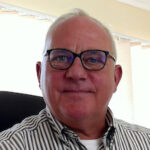 Mathias has worked overseas mainly in countries in conflict, initially with the NGO ‘Cap Anamur’ in Bosnia, Somaliland and Rwanda. He joined the International Committee of the Red Cross (ICRC) in 1996 to continue combining humanitarian work with his professional field as a Veterinarian, but also as Livelihoods and Economic Security Specialist in a broad palette of programs and contexts in the Horn of Africa, the South Caucasus, Pakistan and the Philippines. He worked as Economic Security Program Manager, and then spent seven years in the ICRC Geneva Headquarters as Head of Sector for the Horn of Africa and Reference Veterinarian. After the Geneva assignment, Mathias became the Regional ICRC Veterinarian based in Nairobi covering East Africa, countries in the Middle East and parts of Asia for four years.
Mathias holds a doctoral degree in Veterinary Medicine and a postgraduate Diploma in Animal Health Management and Tropical Veterinary Medicine (FU Berlin). Mathias phased out of his full time ICRC engagement in 2021 and now carries out short livestock / veterinary field missions for the same organization. He has been a member of the LEGS Advisory Group for the past four years and is also a certified LEGS Trainer.
Dr. Eilia Jafar
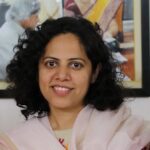 Eilia is a development and humanitarian professional with over 20 years of experience in governance, senior management, program design and implementation, strategic partnerships and networking, quality and accountability, policy, strategy, and organization development – including several international missions in South Asia. She has authored several academic papers and articles on disaster management, business continuity management, quality, accountability, and gender in emergencies in national and international journals and newspapers. She has worked with CARE, International Federation of Red Cross and Red Crescent Societies (IFRC) – South Asia and India Delegations, and UNDP.
Besides other independent assignments, she is currently also working as Chief of Programs at SaveLIFE Foundation. She has also served as a board member of several organisations (GeoHazards Society, Sphere India and Tanyak). Eilia holds a doctoral degree in Business Continuity Management. She is a certified life coach and executive coach, and has a passion for coaching and mentoring.
Technical Advisory Group
Dr. Andy Catley, Chair
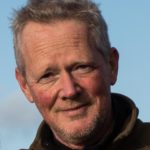 Andy is a Research Professor Emeritus at Tufts University, USA. His career includes 17 years working in areas affected by conflict, drought, and complex emergencies in the Horn of Africa. He has led more than 50 evaluations of livestock, food security, agriculture, and human nutrition programs in humanitarian and development contexts. His programs included technical and coordination support to donors, governments, inter-governmental agencies, and UN agencies. His work on long-term trend analysis in pastoralist areas and commercialization processes helped to shape the policies of the African Union, IGAD, COMESA, and USAID. In 2005 Andy initiated and designed the LEGS project and he chaired the LEGS Steering Group from 2005 to 2015 and thereafter was a member of the LEGS Advisory Group. In 2019 he set up the SEADS project and chaired the SEADS Steering Group until early 2026. He currently chairs the joint LEGS-SEADS Technical Advisory Group.
Andy holds a PhD in epidemiology from the University of Edinburgh and is a Fellow of the Royal College of Veterinary Surgeons, UK.
Wendy Fenton
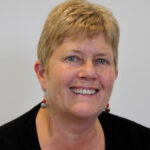 Wendy has over 40 years of operational, management and advisory experience in humanitarian and development programming with NGOs (VSO and Save the Children) and donors (USAID/OFDA and CIDA) across a wide range of sectors primarily in Sudan, South Sudan and Ethiopia.
Before joining ODI Global in 2009, Wendy worked as an independent consultant focusing on fragile states, specifically issues related to NGO programming, funding mechanism performance and safety nets. Wendy also served on the steering groups of the International Humanitarian Studies Association (IHSA) and the Enhancing Learning and Research for Humanitarian Assistance (ELRHA). Wendy was the Coordinator of the Humanitarian Practice Network – hosted by the Humanitarian Policy Group at ODI Global – until her retirement in 2024.
Dr. David Hadrill
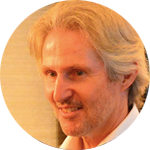 David worked with pioneering community-based animal healthcare projects in India and Kenya in the 1980s. He has undertaken long-term contracts in India, the Caribbean (responsible for an island’s veterinary services and control of the tick, Amblyomma variegatum), Mongolia (team leader of EU project to strengthen national veterinary services), and the Horn of Africa (support to marketing livestock from pastoralist areas of Ethiopia, Djibouti and Somalia). He has undertaken many shorter assignments for FAO, World Bank, Asian Development Bank, and NGOs. This work includes project evaluation, project management and control of transboundary animal diseases including avian influenza, participatory training and disaster relief, and he authored, Horse Healthcare: A Guide for Animal Healthworkers and Owners.
He was a focal point author of the LEGS Handbook and is a member of the LEGS Training of Trainers’ team. David has a BVSc from the University of Bristol, an MSc in Tropical Veterinary Medicine from the University of Edinburgh. David is currently an Independent Veterinary Consultant, based in the UK and Thailand.
Salih Abdel Mageed Eldouma
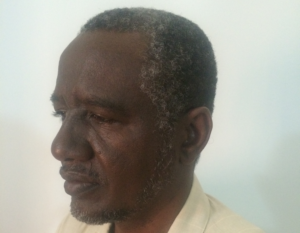 Salih Abdel Mageed Eldouma is a development specialist in the fields of agriculture, rural development, natural resources management, conflict reduction, and livelihood recovery. He has been the Executive Director of SOS Sahel Sudan since 2014, when he led process of transforming the SOS Sahel International UK program in Sudan into a national NGO. Salih began his career at the Sudan Ministry of Agriculture as an agriculture extension officer. He then worked in a variety of capacities with Oxfam Great Britain, the UN Office for the Coordination of Humanitarian Affairs (UNOCHA), and Oxfam America, where he established the Sudan country program and lead a partnership and capacity building program with national NGOs. Salih is a founding member of six civil society organizations in Sudan.
Salih has an MSc in agricultural development and rural finance from the University of Bradford in the UK.
Ludger Jean Simon
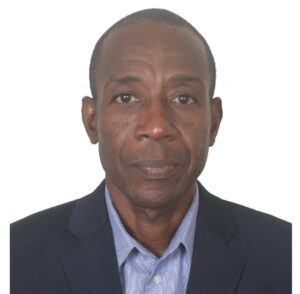 Ludger Jean Simon is a senior agronomist with more than 30 years of experience with agricultural development and research in Haiti. Ludger has managed and led integrated agriculture and value chain programs focused on a range of crop and livestock production systems, including coffee, cacao, mango, papaya, bananas, rice, corn, beans, vegetables, as well as key cross-cutting issues such as climate change, soil fertility management, seed systems, weeds, pests, and diseases. In addition to his extensive field experience, Ludger brings an understanding of the practical opportunities and constraints in smallholder agriculture in Haiti and a deep understanding of evidence-based approaches to improving agricultural production and engaging with markets. Through progressively senior management and technical leadership positions in both development and emergency response programming, Ludger has demonstrated his ability to lead project teams, engage key sector stakeholders, and deliver relevant services to smallholder farmers.
Ada Jacobsen
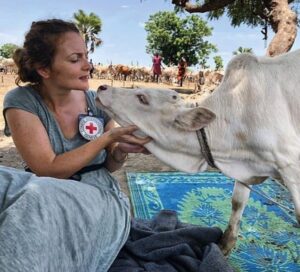 Ada is a veterinarian and livestock specialist with 17 years of experience in emergency livestock and agro-livelihood interventions and animal health systems. Her areas of expertise include livestock interventions in low-input production systems, One Health and crisis management. She joined the International Committee of the Red Cross (ICRC) in 2016 and covered various positions in the Economic Security Unit in Africa, Middle East and Ukraine. Currently she is the Regional Livestock Specialist for the ICRC in Africa and Middle East.
Cecilia Benda
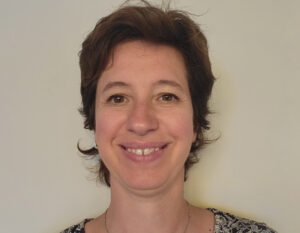 Cecilia Benda has 15 years of experience working in agriculture development, climate smart agriculture, and food security in several countries, including Swaziland, Malawi, Zambia, DRC, and Somalia.
She managed country programs for food and livelihood security with COSPE and Concern Worldwide, and provided strategic and technical support to nutrition-sensitive agriculture and agro-business development to various contexts and programs, including Chad and Niger as agriculture advisor with Concern Worldwide.
Cecilia holds a MSc in Agriculture Science and Technologies from Perugia University and a MSc in Environment and Development from Trinity College in Dublin. She has been a member of CELEP (Coalition of European Lobbies for Eastern African Pastoralism), of the London-based Tropical Agriculture Association’s committee, and a reviewer of the Journal of Sustainable Development.
During the last five years and more recently with her current role of Global Agronomist and Climate Change Lead with the International Committee of the Red Cross, Cecilia is leading the strategic and technical directions of agriculture programs in conflict-affected settings within ICRC’s Economic Security unit.
Dina Brick
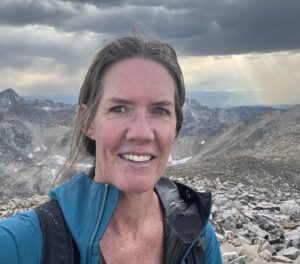 Dina has been working in the field of international food security and markets for 20 years. Dina is a Senior Technical Advisor for Food Security and Markets on Catholic Relief Services’ humanitarian response team. She is part of CRS’ Market-Based Rapid Response and Recovery team, which supports market-based programming in pre-crisis, emergency, and early recovery contexts for food security and other basic needs. She works across humanitarian and development spaces to provide strategy, technical leadership, and technical support to CRS’ food security programs.
Dina has lived in Chad, Burundi, Haiti, and the Federated States of Micronesia for her work, and she has traveled to over 25 countries for technical program support. She holds a MALD from the Fletcher School at Tufts University. Dina currently lives in Colorado, in the U.S., and enjoys spending time with her husband and two little kids, exploring and hiking in the mountains, running, and gardening.
Shawn McGuire
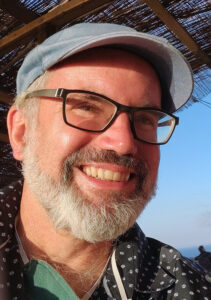 Shawn McGuire is an Agricultural Officer in FAO in Rome. He leads FAO’s work on seed security, providing technical support to dozens of country offices each year. This includes developing programming recommendations for effective humanitarian responses involving seeds, as well as for longer-term resilience-building activities.
Shawn promotes Seed Security Assessments (SSAs) to determine appropriate responses to support smallholders’ access to seed and has been involved in developing and promoting these tools for nearly 20 years. He also supports seed sector development and policy reform. His background combines plant science and international development.
Previously, Shawn was Senior Lecturer in Natural Resources at the University of East Anglia’s School of Global Development (UK), and has conducted assignments for NGOs, donor agencies, and research institutes. He has field experience in many countries, particularly Ethiopia, where he lived for several years.
Neil Marsland
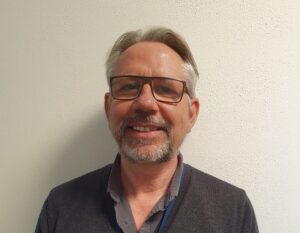 Neil Marsland is Head of the Program Quality Team in the Emergency and Resilience Division of FAO in Rome. An agricultural economist by training, Neil has been working in the field of rural development and food security for 30 years. Before joining FAO, he worked for a range of organizations including donors, INGOs, academia, and research institutions. He has worked in more than 40 countries and has lived in Malawi, India, and Zimbabwe. His main thematic areas of interest and experience are monitoring and evaluation; emergency food security and agricultural assessment; resilience assessment and programming; and the use of geospatial applications for agricultural sector analysis in emergencies.l years.
Cathy Watson, LEGS and SEADS Coordinator (in attendance)
 Cathy is a social development consultant working on pastoral development with a particular focus on pastoral livelihoods, and gender and pastoralism. Her consultancy experience includes participatory research and writing, evaluations, training and capacity building, strategic planning, and workshop facilitation. Cathy’s long-term field work experience includes four years with Turkana pastoralists in Kenya, four years with Karimojong pastoralists in Uganda, support to small-holder farmers in Zimbabwe and Kenya, and urban poverty and livelihoods in Ethiopia. Her employment experience includes social science support to NGO development worker teams, NGO middle management and leading research teams. She has a bachelor’s degree from the University of Bristol and a master’s degree in Social Anthropology from the University of Manchester.
Funding
LEGS has been funded thus far (including in-kind support*) by the following organisations, whose contributions are gratefully acknowledged: