
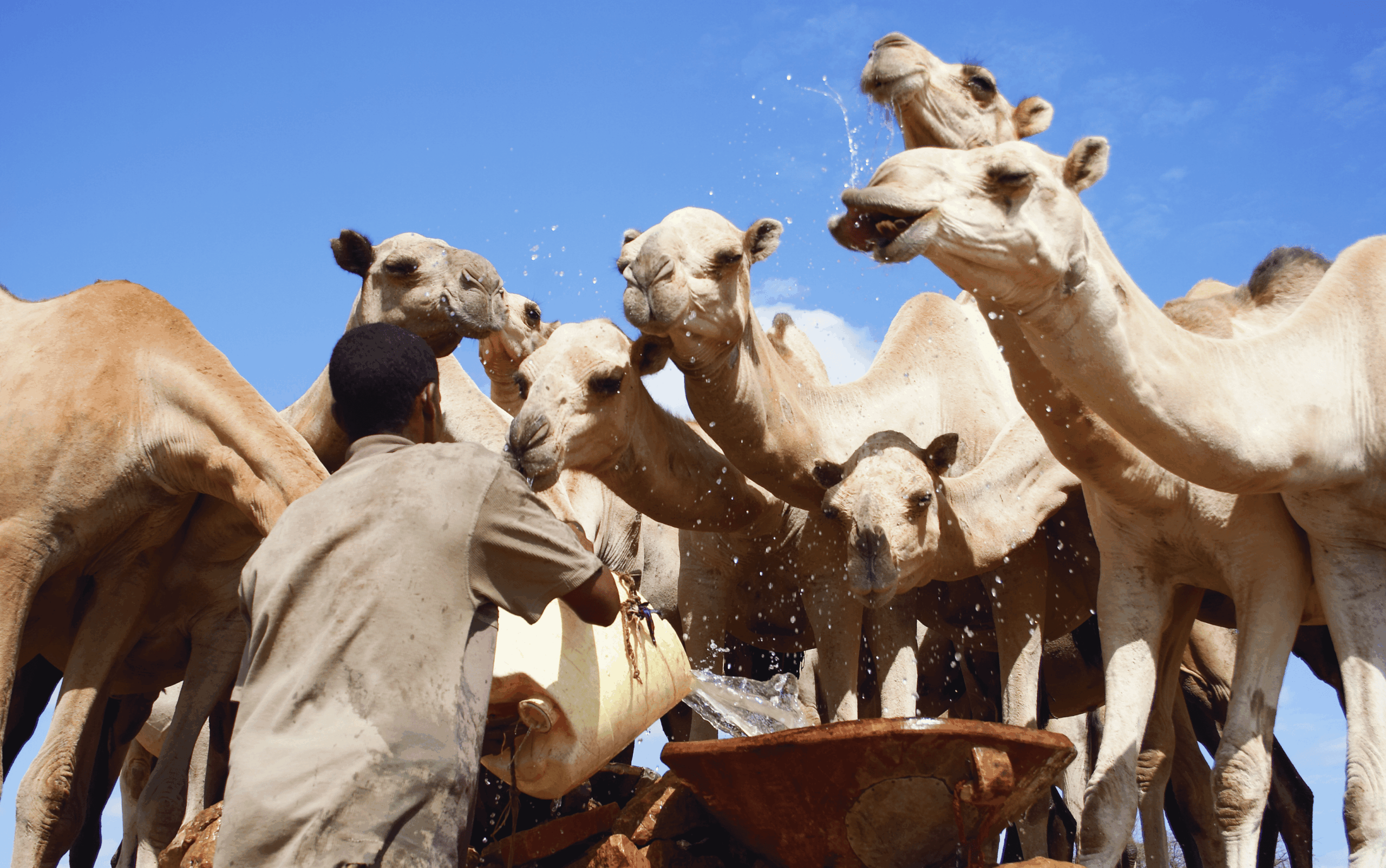
Pastoralist watering camels in Somali Region Ethiopia | Photo credit: Kelley Lynch
In 2026, two United Nations International Years are drawing attention to the people behind livestock-based livelihoods: the International Year of Rangelands and Pastoralists (IYRP) and the International Year of the Woman Farmer (IYWF).
Although each focuses on a different group, they share a common message. They recognise the knowledge, skills and contributions of people whose livelihoods depend on livestock and call for greater recognition, more inclusive decision-making and stronger support for their livelihoods.
For LEGS (the Livestock Emergency Guidelines and Standards), this message is at the heart of the LEGS Approach to livestock-based emergency response.
Two International Years, one shared purpose
The International Year of Rangelands and Pastoralists highlights the importance of rangelands and the pastoralists who depend on them. Around the world, there are more than 200 million pastoralists, many living in drylands, cold regions and high mountains where conventional crop farming is not possible. They are key custodians of rangelands and play an important role in food security while preserving ecosystems, cultural heritage and local and indigenous knowledge.
The International Year of the Woman Farmer recognises the essential role women play across agrifood systems. Women contribute to food security, nutrition and economic resilience, yet their work often goes unrecognised, and many continue to face barriers to land, finance, services, education and decision-making.
Together, these International Years remind us that effective policies and programmes start by recognising the people whose knowledge and experience shape livestock-based livelihoods.
How LEGS puts this into practice
The LEGS Approach is built on participation. It promotes emergency livestock responses that are designed with communities through participatory assessment, prioritisation and implementation. This means recognising the knowledge and practices of small-scale livestock keepers, many of whom are pastoralists and around half of whom are women.
LEGS also recognises that different groups experience crises in different ways. Supporting gender-sensitive programming is one of the six principles of the LEGS Approach. The LEGS Handbook encourages practitioners to engage with women and girls, as well as men and boys, during assessments, collect gender-disaggregated information, and understand how livestock interventions may affect workloads and access to livestock resources. This helps ensure that emergency responses are appropriate, inclusive and effective.
LEGS is also proud to be part of the IYRP Global Alliance, joining organisations around the world in supporting pastoralists and helping amplify their voices in decision-making and planning.
Turning recognition into action
The two International Years are an opportunity to celebrate pastoralists and women livestock keepers, but they are also a reminder that recognition should lead to action.
For LEGS, that means continuing to promote livestock-based emergency responses that listen to communities, value local knowledge and support people in protecting their livelihoods during crises.
As 2026 unfolds, LEGS welcomes the opportunity to stand alongside these global initiatives and reinforce a simple message: humanitarian responses are stronger when they recognise, include and work with the people they are designed to support.
