
Sixteen humanitarian and animal health professionals from Africa, Asia and Europe have been equipped to deliver LEGS Core Training, boosting the capacity of humanitarian actors to protect livestock and livelihoods in emergencies. The six-day LEGS Training of Trainers (ToT) course took place in Nairobi, from 23-28 February 2026. Participants were mainly drawn from working animal welfare organisations – highlighting the relevance of LEGS to animal welfare – and included veterinarians, community animal health professionals, programme managers, and monitoring and evaluation specialists.
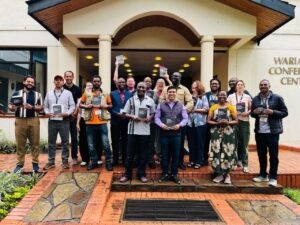
© Ali Raza
Commissioned by The Brooke, the International Committee of the Red Cross (ICRC), SPANA, and The Donkey Sanctuary, the six-day course followed the updated 2025 LEGS ToT curriculum. It combined presentations with participatory methods such as group work, case studies, simulations and practice training sessions. These approaches enabled participants to not only deepen their understanding of the LEGS approach, but also to develop the facilitation skills required to deliver the three-day LEGS Core Training Course.
Participant feedback highlighted the course’s practical value and strong facilitation provided by the LEGS trainers. All participants rated the training as “very good”, and learning objectives were overwhelmingly reported as fully met. Many emphasised the relevance of LEGS to their work in drought response, humanitarian programming and livestock-based livelihoods.
One participant noted: “The intersection of humanitarian response, veterinary, and livelihoods focus is highly relevant to my work.” Another added: “The practical component where participants deliver the sessions themselves is particularly valuable, as it helps identify strengths and areas for improvement.”
A representative from the National Drought Management Authority of Kenya also briefed participants on their experience as the LEGS institutional focal point in Kenya and the role of LEGS in strengthening drought preparedness and livestock emergency responses.
Following the training, participants developed action plans to deliver their first LEGS Core Trainings within the next six months. Planned trainings are expected to take place across several regions including West Africa, East Africa, India and within partner organisations globally, helping to expand the global network of LEGS trainers.
The Nairobi ToT represents an important step in strengthening capacity to implement livelihoods-based livestock interventions in emergencies, ensuring that humanitarian responses better protect the livestock assets and livelihoods of vulnerable communities.
