
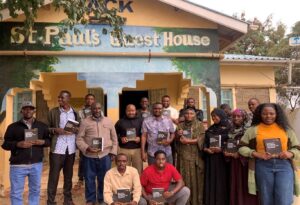
Nine LEGS Core Trainings delivered across Marsabit and Turkana Counties between August and September 2025 have generated exceptionally positive feedback, with participants reporting stronger confidence, deeper understanding of key tools, and a clear appetite for continued support. The trainings – held in Moyale, Logologo, Saku and North Horr in Marsabit, and Loima, Lodwar, Kakuma, Lokitaung, and Lokichar in Turkana – were organised by Concern Worldwide through the SERVE project and facilitated by newly certified LEGS Trainers from Concern and the County Government.
© Concern Worldwide
A total of 163 participants took part, representing county departments, NGOs, private veterinary practitioners and community-based organisations. Evaluations showed near-unanimous agreement that the training objectives were met, with many highlighting the relevance of LEGS to the recurring droughts and livestock emergencies that shape pastoralist livelihoods in Marsabit and Turkana Counties.
Inclusive learning
One of the most notable outcomes emerged in Logologo, where the trainers observed four women gradually becoming more vocal and confident over the three days. Rather than being an isolated incident, this was linked directly to the participatory, adult-learning methods used throughout the training – approaches that created safe spaces for quieter participants to engage. By the final day, the women were contributing actively in plenary discussions and leading group presentations. This shift demonstrates how LEGS’ learner-centred methodology can foster inclusion in a natural, supportive way.
Another interesting trend was the consistently positive feedback on the Monitoring, Evaluation, Accountability and Learning (MEAL) sessions. Historically one of the more challenging modules, MEAL – recently strengthened with clearer, more practical guidance in both the LEGS Handbook and the core training curriculum – was rated among the most valuable topics in all four trainings. The trainers suggested this improvement reflects both the strengthened curriculum and the growing emphasis on accountability and impact across LEGS interventions.
A common theme across all the evaluations was the request for post-training support. Participants valued the training but emphasised the need for follow-up opportunities – such as refresher sessions, mentorship, and communities of practice – to help them apply what they learned. In Marsabit, trainers noted that Kenya’s LEGS Community of Practice has successfully used WhatsApp groups in the past, suggesting an easy and effective way to maintain communication and peer support. This feedback is especially relevant for organisations commissioning LEGS Core Trainings: planning – and resourcing – post-training engagement from the outset can significantly improve long-term impact.
Concern Worldwide’s leadership in strengthening LEGS Trainers’ capacity
The trainings also reflect the strong leadership role played by Concern Worldwide. Having invested in the development of a new cohort of LEGS Trainers, Concern has moved quickly to provide opportunities for them to practise and work toward accreditation. This highlights a message relevant across the LEGS community: organisations sponsoring LEGS TOT courses need to plan proactively for how trainers will be supported and engaged after certification, ensuring that momentum is maintained and the investment leads to wider rollout.
Taken together, the four trainings illustrate a growing commitment to strengthening livestock emergency response across Marsabit and Turkana Counties. With improved confidence, clearer MEAL understanding, and strong interest in ongoing learning, local practitioners are increasingly well equipped to apply LEGS in ways that support both immediate needs and long-term resilience.
